
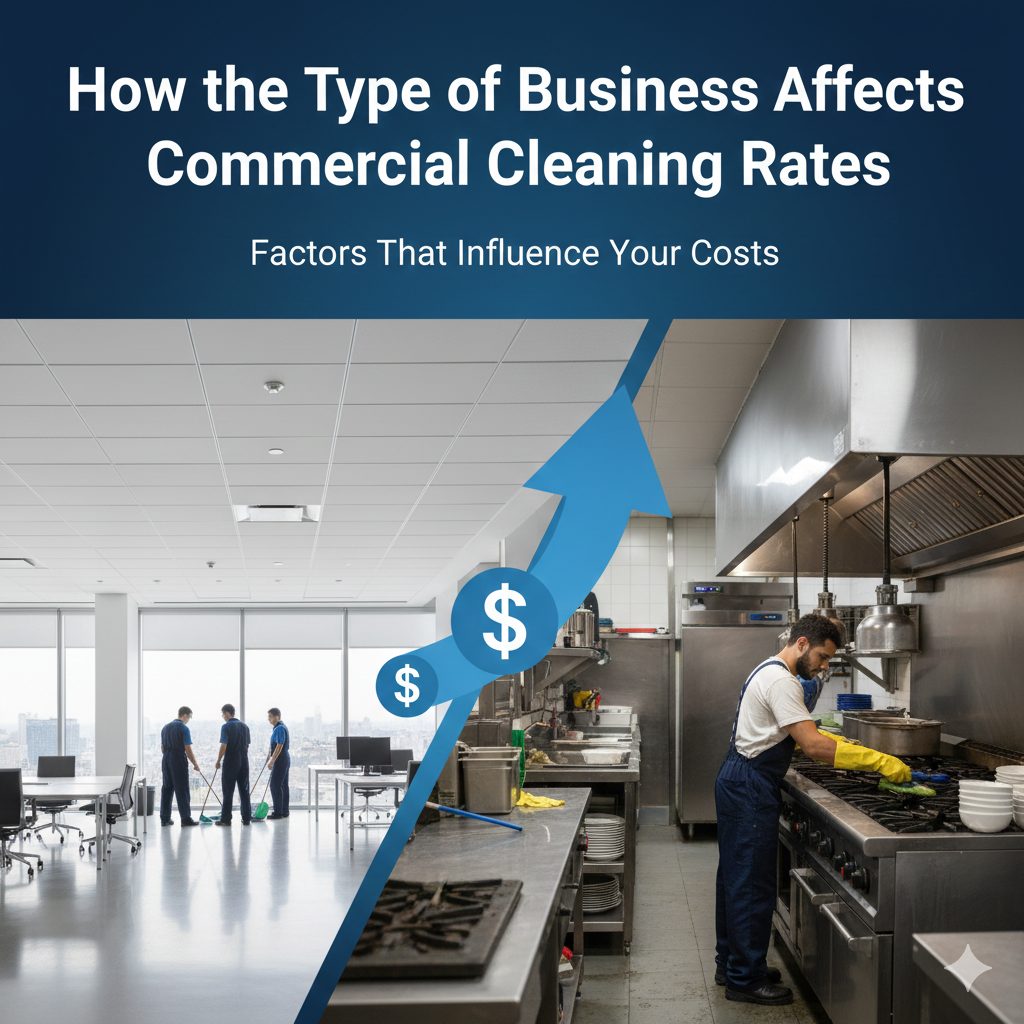
Every business needs to stay clean. Clean spaces make employees happy. They also give a good impression to clients. However, not all businesses need the same cleaning. The commercial cleaning rate can vary widely. It depends on the type of business, the size of the space, and the services required.
For example, an office may need daily dusting and trash disposal. A medical clinic requires deep cleaning and strict hygiene checks. A restaurant or gym has high traffic and special cleaning needs. Even the layout of a space or the number of visitors can affect the price. Understanding these differences helps business owners plan budgets. Furthermore, it ensures that cleaning is effective and safe for everyone.
In this blog, we will explain how different business types affect commercial cleaning costs. We will also share tips to manage costs without compromising quality. Knowing these details can save money and maintain a healthy, professional environment.
Factors Influencing Commercial Cleaning Rates
Several factors affect the commercial cleaning cost. First, the square footage of the space matters. Larger spaces need more time, equipment, and staff. Next, the frequency of cleaning changes the price. Daily cleaning is more expensive than weekly or monthly service.
Another factor is the complexity of cleaning tasks. Standard dusting costs less than deep cleaning or sanitation work. Specialised cleaning, such as sanitising medical equipment or industrial areas, raises costs further. Also, supplies and equipment matter. Eco-friendly, medical-grade, or industrial products cost more than standard cleaning solutions.
Labour is another factor. Trained staff, police-checked personnel, or certified cleaners increase the commercial cleaning cost. Location and accessibility also play a role. Hard-to-reach areas, high floors, or urban locations may take extra time. Therefore, understanding these factors helps businesses estimate commercial cleaning costs accurately and plan accordingly.
Office Spaces
Offices are common spaces for commercial cleaning. Services usually include dusting, vacuuming, trash disposal, and floor cleaning. Some offices also request window cleaning or carpet steam cleaning. These services keep the workplace healthy and professional.
The commercial cleaning cost depends on office size and layout. Small offices cost less than large corporate spaces. Open-plan offices may take more time than individual rooms. Cleaning frequency also affects pricing. Daily cleaning is higher than weekly or after-hours cleaning.
Optional services, like cleaning IT equipment or deep carpet cleaning, add to the commercial cleaning cost. Scheduling regular cleaning with occasional deep cleans is efficient. Furthermore, planning allows businesses to maintain cleanliness without overspending. Office cleanliness improves employee productivity and client perception.
Medical Facilities
Medical facilities need strict hygiene. GP clinics, dental offices, and allied health centres must follow health rules. The commercial cleaning cost is higher because of these requirements.
Services include sanitising floors, equipment, and restrooms. Staff must be trained in infection control and proper cleaning procedures. Specialised chemicals and biohazard disposal increase costs further. Clinic size and patient traffic also affect pricing. A small clinic costs less than a busy hospital or dental centre.
Regular cleaning schedules and deep cleaning of waiting areas, examination rooms, and restrooms are essential. Furthermore, high hygiene standards protect both patients and staff. Because of these factors, the commercial cleaning cost in medical facilities is usually higher than in regular offices. Proper planning ensures compliance and safety without surprises.
Retail Spaces
Retail spaces have unique cleaning needs. Customer areas, display shelves, and high-traffic floors must stay clean. The commercial cleaning cost depends on store size, layout, and visitor numbers.
Services include floor cleaning, glass and window cleaning, and restroom hygiene. Retail stores may need cleaning during early morning or late-night hours to avoid disrupting business. Boutiques and small shops cost less than large department stores. Cleaning frequency also affects the commercial cleaning cost. Daily maintenance is more expensive than weekly cleaning.
Well-planned cleaning ensures a tidy store, enhances the shopping experience, and maintains hygiene standards. Therefore, retail businesses should align cleaning schedules with peak customer hours to optimise cost and results.
Industrial and Manufacturing Facilities
Factories, warehouses, and manufacturing sites face heavy cleaning challenges. Dust, chemicals, and machinery residues require specialised care. The commercial cleaning cost is higher due to these needs.
Services include factory floor cleaning, machine degreasing, and warehouse maintenance. Staff must be trained in industrial cleaning and safety procedures. Industrial-grade cleaning products and equipment are often required. Large facilities with dense machinery cost more to clean than smaller sites.
Compliance with safety and environmental regulations also raises costs. Regular cleaning prevents accidents, reduces equipment downtime, and improves workplace safety. Therefore, industrial businesses must plan and budget for cleaning carefully to maintain a safe and efficient environment.
Hospitality and Leisure Businesses
Hotels, gyms, restaurants, and spas have high hygiene standards. These businesses handle many guests and high foot traffic. The commercial cleaning cost reflects these factors.
Services include cleaning guest rooms, kitchens, pools, and gyms. Frequent cleaning of high-touch areas is essential. Extra costs may include laundry services and eco-friendly products. Deep cleaning after events or during busy seasons can increase costs further. Daily cleaning is more expensive than occasional cleaning.
Proper cleaning ensures guest satisfaction, staff safety, and a healthy environment. Therefore, hospitality and leisure businesses must schedule cleaning carefully to balance hygiene needs with the commercial cleaning cost.
How Location and Accessibility Affect Rates
Location impacts the commercial cleaning cost. Urban offices often have higher rates due to labour and transportation costs. Suburban areas are usually cheaper.
Accessibility also affects pricing. Buildings with security checks, high floors, or limited parking require more time. This increases labour hours and overall cost. Businesses in complex locations must plan for a higher commercial cleaning cost. Proper scheduling and clear access instructions can reduce surprises and improve efficiency.
Seasonal and Special Considerations
Seasonal cleaning affects commercial cleaning cost. Spring cleaning, post-event cleaning, or flu season sanitisation requires extra effort.
Special events may require one-time deep cleans. These tasks need additional staff, equipment, and cleaning products. Proper planning for seasonal and special cleaning reduces unexpected costs. Furthermore, scheduling ahead ensures cleaning is thorough and meets hygiene standards. Businesses that plan for seasonal tasks can control their commercial cleaning costs effectively.
Tips for Businesses to Control Cleaning Costs
There are several ways to manage the commercial cleaning cost. Compare quotes from multiple providers and check what is included. Ask about supplies, equipment, and labour costs.
Schedule regular cleaning to prevent expensive deep cleans later. Combine services like window, carpet, and office cleaning. Discuss customised packages with cleaning providers. Set clear expectations for frequency, tasks, and timing.
Efficient planning helps businesses save money while keeping spaces clean and safe. Understanding your cleaning needs is key to controlling costs and maintaining hygiene standards. Therefore, businesses can reduce the commercial cleaning cost with smart planning and careful scheduling.
Conclusion
The commercial cleaning cost depends on business type, size, and cleaning needs. Offices, medical facilities, retail spaces, industrial sites, and hospitality businesses all have unique requirements. Larger spaces, frequent cleaning, and specialised tasks increase costs. Planning and understanding your business needs help manage the commercial cleaning cost effectively. Compare quotes, schedule regular cleaning, and combine services to save money. Proper cleaning ensures safety, hygiene, and a professional appearance.
For tailored solutions and reliable service, reach out to Townsend Cleaning. We provide professional advice and customised cleaning packages to fit your business needs.
FAQs
-
Why does the type of business affect the commercial cleaning rate?
Different businesses have different cleaning needs. Offices need dusting and floor cleaning. Medical facilities need strict hygiene. Retail and industrial spaces have unique requirements. These factors make the commercial cleaning rate vary.
2. How does cleaning frequency impact commercial cleaning cost?
Daily cleaning costs more than weekly or monthly service. More frequent cleaning uses more labour, equipment, and supplies, increasing the commercial cleaning cost.
3. Do medical facilities pay more for cleaning than offices?
Yes. Medical facilities require trained staff, specialised chemicals, and strict hygiene. These needs make the commercial cleaning rate higher than in standard offices.
4. Can location affect commercial cleaning cost?
Yes. Urban areas often have higher labour costs. Hard-to-access or high-rise buildings take more time to clean. These factors raise the commercial cleaning cost.
5. How can businesses control commercial cleaning costs?
Businesses can compare quotes, schedule regular cleaning, and combine services like window and carpet cleaning. Planning ahead helps reduce the commercial cleaning cost without compromising quality.